
Pakistan Air Force Fighter Jets: Guardians of the Sky
- Introduction: The Steel Birds of Pakistan’s Air Force
- A Legacy of Flight: Tracing the PAF’s Fighter History
- The Backbone of the Fleet: JF-17 Thunder
- The Punch of the Falcon: Pakistan’s F-16s
- The New Era: J-10C and Beyond
- Mirages and F-7s: The Aging Stalwarts
- Training the Next Generation: Trainer Aircraft
- Beyond the Fighters: Support and Special Missions
- Challenges and the Future
- Conclusion: Pakistan Air Force Fighter Jets in the Modern Age
The Pakistan Air Force fighter jets are often at the forefront of discussions about the nation’s defense capabilities. As someone who has always been fascinated by military aviation, I’ve spent countless hours reading and learning about these incredible machines and the pilots who fly them. It’s clear that the Pakistan Air Force (PAF) has built a formidable fleet, a crucial component in safeguarding the country’s airspace and interests. With a history stretching back to 1947, the PAF has continuously evolved, integrating various aircraft to meet the challenges of a dynamic security environment.
The PAF’s primary mission is to provide an efficient and cost-effective aerial defense of Pakistan, working in synergy with the army and navy. Over the years, Pakistan Air Force fighter jets have been involved in numerous operations, demonstrating their capabilities in both conventional warfare and counter-insurgency roles. This article will delve into the key aircraft that make up the PAF’s fighter inventory, exploring their roles, capabilities, and significance.
A Legacy of Flight: Tracing the PAF’s Fighter History
The history of the Pakistan Air Force is a fascinating journey, starting with a modest collection of aircraft at the time of independence in 1947. Initially, the Royal Pakistan Air Force (RPAF), as it was then known, operated a mix of British-made propeller-driven aircraft like the Tempest II and Hawker Typhoon. The move into the jet age began in the 1950s with the induction of aircraft like the F-86 Sabre, which significantly boosted the PAF’s capabilities. I can only imagine the excitement and pride felt by those early pilots transitioning to these faster, more advanced machines!
Over the decades, the PAF has operated a diverse range of fighter jets from various origins, including the United States, France, and China. This diversification wasn’t just a matter of choice; it was often influenced by geopolitical factors and arms embargoes, such as the one imposed by the U.S. in 1990.
The Backbone of the Fleet: JF-17 Thunder
When you talk about modern Pakistan Air Force fighter jets, the JF-17 Thunder is undoubtedly one of the first aircraft that comes to mind. This lightweight, single-engine, multirole combat aircraft is a product of a joint development program between the Pakistan Aeronautical Complex (PAC) and China’s Chengdu Aircraft Corporation (CAC). It was specifically designed as a cost-effective, unsanctionable replacement for older aircraft like the F-7s and Mirages.
I’ve seen the JF-17 referred to as the “Pride of Pakistan,” and it’s easy to see why. It represents a significant step towards indigenous defense production and has been continuously upgraded through various blocks (Block 1, Block 2, and Block 3). The latest Block 3 variant is equipped with advanced features like an AESA radar, helmet-mounted display, and beyond-visual-range missile capability, making it a potent platform in modern aerial warfare.
The JF-17 has also seen combat action, being used in counter-insurgency operations and reportedly in cross-border airstrikes. Its operational success and relatively lower cost have also made it an attractive option for export to other countries.

This image is a fictional image generated by GlobalTrendHub.
JF-17 Capabilities: More Than Just a Fighter
What makes the JF-17 Thunder so versatile? It’s designed for multiple roles, including air-to-air interception, ground attack, anti-ship missions, and aerial reconnaissance. The Block 3 improvements have further enhanced its electronic warfare capabilities and ability to integrate radar feeds and satellite imagery for better situational awareness. This multi-role capability is crucial for a country like Pakistan, which needs a flexible air force to address a range of potential threats.
The Punch of the Falcon: Pakistan’s F-16s
The F-16 Fighting Falcon has a long and notable history with the Pakistan Air Force. Pakistan was one of the early export customers for this iconic American jet, receiving its first F-16s in 1983. These aircraft provided a significant leap in technology and capability for the PAF at the time.
Over the years, Pakistan has operated various blocks of the F-16, including the Block 15 and the more advanced Block 52+ variants. The F-16 is known for its agility and effectiveness in air-to-air combat, and the PAF has utilized them in various operations, including counter-terrorism efforts.
Interestingly, the use of Pakistan’s F-16s has sometimes been subject to restrictions by the United States, primarily intended for counter-terrorism operations rather than against neighboring countries. This highlights the complex geopolitical factors that can influence the use of military assets.
The New Era: J-10C and Beyond
A relatively recent, but very significant, addition to the Pakistan Air Force fighter jets inventory is the Chinese-made J-10C Vigorous Dragon. This medium-weight, single-engine, multirole combat aircraft represents a further modernization of the PAF fleet, bringing advanced 4.5+ generation capabilities.
The J-10C is equipped with a powerful AESA radar and is capable of carrying advanced beyond-visual-range missiles, positioning it as a strong contender in modern aerial engagements. Its induction signals a strategic move by the PAF to enhance its technological edge.
Looking ahead, there have also been discussions and plans regarding the potential procurement of the J-31, a fifth-generation stealth fighter from China. This would be a major leap in capability, providing the PAF with radar-evading technology, although it remains to be seen when and if this will materialize.
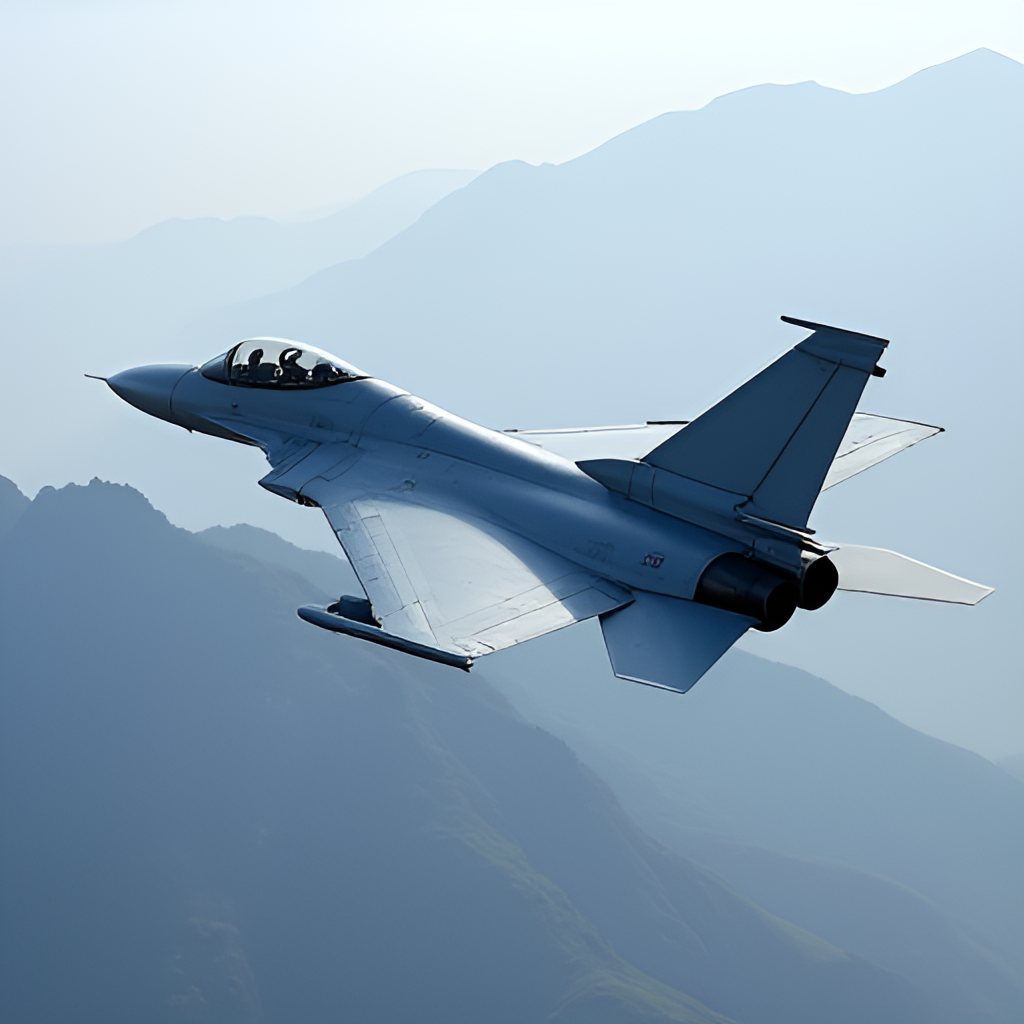
This image is a fictional image generated by GlobalTrendHub.
The 3Js Synergy: JF-17, J-10C, and J-31
Some analysts talk about the potential “3Js” synergy if the J-31 is acquired, complementing the existing JF-17 and J-10C fleets. This combination of aircraft, along with the upgraded F-16s and Mirages, would provide the PAF with a layered and versatile air combat capability, capable of handling different aspects of modern aerial warfare, from close-in dogfights to beyond-visual-range engagements.
Mirages and F-7s: The Aging Stalwarts
While the JF-17, F-16, and J-10C represent the more modern elements of the Pakistan Air Force fighter jets, the PAF also operates a significant number of older, albeit upgraded, aircraft like the French Mirage III and Mirage 5, and the Chinese F-7.
These aircraft have been the workhorses of the PAF for many years and have undergone extensive upgrades under programs like Project ROSE (Retrofit of Strike Element) to enhance their capabilities and extend their service life. However, they are gradually being replaced by newer platforms like the JF-17 and J-10C. It’s a natural progression as technology advances, but these older jets hold a significant place in the PAF’s history and have proven their worth in various conflicts.
Training the Next Generation: Trainer Aircraft
An air force is only as good as its pilots, and rigorous training is paramount. The Pakistan Air Force utilizes various trainer aircraft to prepare its pilots for the demanding world of fighter aviation. The PAC MFI-17 Mushshak and Super Mushshak serve as primary trainers, while the K-8 Karakorum is used for intermediate jet training.
This focus on comprehensive pilot training is a critical factor in the PAF’s operational effectiveness. I’ve always admired the skill and dedication of military pilots; it takes a special kind of person to handle these high-performance machines.
Beyond the Fighters: Support and Special Missions
While fighter jets often grab the headlines, the Pakistan Air Force fleet includes a range of other aircraft essential for a modern air force. This includes transport aircraft like the C-130 Hercules and CN-235, as well as aerial refueling tankers like the Il-78 to extend the range and endurance of fighter operations.
The PAF also operates special mission aircraft, such as Airborne Early Warning and Control (AEW&C) platforms like the Saab 2000 Erieye, which provide crucial radar surveillance and command and control capabilities. These support aircraft are vital for ensuring the overall effectiveness of the Pakistan Air Force fighter jets and the entire air arm.
Challenges and the Future
Like any modern military, the Pakistan Air Force faces challenges. Financial constraints can impact the pace of modernization and acquisition of new platforms. Geopolitical factors and export restrictions on certain technologies also play a role.
However, the PAF continues to focus on enhancing its capabilities through upgrades to existing aircraft, indigenous development programs like the JF-17, and strategic acquisitions like the J-10C. The emphasis on advanced weaponry, electronic warfare, and integrated air defense systems demonstrates a commitment to maintaining a credible defense posture. The recent focus on AI-enabled capabilities also suggests a forward-looking approach.
Conclusion: Pakistan Air Force Fighter Jets in the Modern Age
In conclusion, the Pakistan Air Force fighter jets represent a diverse and evolving fleet, crucial for the nation’s defense. From the domestically developed JF-17 Thunder to the advanced J-10C and the seasoned F-16s and Mirages, each aircraft plays a vital role. The PAF’s continuous efforts to modernize its inventory, invest in pilot training, and enhance its support infrastructure underscore its commitment to maintaining a strong aerial defense. My exploration into the world of Pakistan Air Force fighter jets has been fascinating, revealing a force that is adapting to the complexities of 21st-century aerial warfare.