
Monaco GP: Racing Through Monte Carlo
- Introduction to the Jewel in the Crown
- The Unforgiving Circuit de Monaco
- History and Prestige: More Than Just a Race
- The Driver’s View: Taming the Beast
- Moments Etched in History
- Strategy in the Modern Monaco GP: The Two-Stop Rule
- The Spectacle and the Glamour
- Monaco GP Frequently Asked Questions
- Why the Monaco GP Still Captivates
Monaco GP is arguably the most prestigious and challenging race on the Formula 1 calendar. Having followed Formula 1 for years and even had the chance to visit Monte Carlo during a non-race period, I can attest that the atmosphere around this event, even without the cars, feels electric. It’s a unique spectacle, a throwback to the early days of motorsport, crammed into the narrow, winding streets of the principality. Why does this particular race hold such a legendary status, and what makes it a challenge unlike any other? Let’s dive into the world of the Monaco Grand Prix.
The Unforgiving Circuit de Monaco
The Circuit de Monaco, often simply called Monte Carlo, is a 3.337 km (2.074 miles) street circuit that winds through the heart of Monte Carlo and La Condamine. It’s a track characterized by tight corners, significant elevation changes, and incredibly narrow sections where the barriers are mere inches away from the cars. Unlike purpose-built circuits with ample run-off areas, the Circuit de Monaco offers virtually no margin for error. A single mistake can easily end a driver’s race in the wall.
The circuit layout has remained largely unchanged since 1950, a testament to its enduring character and the vision of its original designer, Antony Noghès. Key sections like Sainte Dévote (the first corner after the start), the uphill climb through Beau Rivage and Massenet towards Casino Square, the famous Grand Hotel Hairpin (the slowest corner in F1, taken at around 45 km/h or 30 mph), the exhilarating run through the tunnel, and the challenging Piscine complex are instantly recognizable to any F1 fan.
The lack of long straights means teams run special high-downforce car configurations to maximize grip at lower speeds. Despite the relatively low average speeds compared to other tracks (the lap record average speed is around 164.769 kph), the mental and physical demands on the drivers are immense. Constant concentration is needed, lap after lap, for all 78 laps of the race.
History and Prestige: More Than Just a Race
The Monaco Grand Prix boasts a rich history, with the first race held on April 14, 1929. It was included in the very first Formula 1 World Championship in 1950 and has been a permanent fixture since 1955, except for the cancellation in 2020 due to the pandemic. This long-standing presence on the calendar, coupled with its glamorous setting, has cemented its status as one of the most important and prestigious automobile races in the world.
It’s part of motorsport’s unofficial ‘Triple Crown,’ alongside the Indianapolis 500 and the 24 Hours of Le Mans, an achievement that underscores its unique place in racing history. Winning in Monaco is considered the pinnacle for many drivers, a true test of skill and precision that stands apart from victories on more conventional circuits. Only two Monégasque drivers have ever won their home race: Louis Chiron in 1931 and, more recently, Charles Leclerc in 2024.
The Driver’s View: Taming the Beast
What’s it actually like to drive an F1 car around Monte Carlo? Drivers often describe it as a visceral, intense experience. Former F1 driver Jolyon Palmer called it “madness,” even compared to other street circuits, due to its narrowness, cambered roads, and constant challenges. The proximity of the barriers means there’s zero room for mistakes.
Qualifying is exceptionally crucial here because overtaking during the race is notoriously difficult. The grid position established on Saturday often dictates the final race result. For example, in the 2024 race, the top 10 finishers were in the same order they started. Drivers push the limits, often brushing the walls in their search for precious milliseconds. This makes qualifying one of the most thrilling sessions of the weekend.
I can only imagine the sheer focus required, lap after lap, navigating those tight turns with incredible speed. It’s a dance between pushing the car to its absolute limit while maintaining the discipline to avoid contact with the unforgiving walls. As someone who’s driven simulators, the idea of doing that in a real F1 car is just mind-blowing!
Moments Etched in History
The Monaco Grand Prix has provided countless unforgettable moments throughout its history. Ayrton Senna, known as the ‘King of Monaco,’ holds the record for most wins with six victories, including a remarkable five consecutive wins between 1989 and 1993. His masterful defensive drive against Nigel Mansell in 1992, holding off a faster car lap after lap, is legendary.
Who could forget the chaotic 1982 race, nicknamed “the race no-one wanted to win,” where the lead changed hands multiple times in the final laps due to crashes and fuel issues? Or Olivier Panis’s surprise victory in 1996 from 14th on the grid in a race of high attrition? These moments highlight the unpredictable nature that can sometimes prevail amidst the precision required.
Even controversial moments, like Michael Schumacher’s infamous qualifying incident at Rascasse in 2006, are part of the Monaco lore, demonstrating the immense pressure and stakes involved. Lewis Hamilton’s strategic masterclass in the wet 2008 race also stands out as a defining moment.
This image is a fictional image generated by GlobalTrendHub.
Strategy in the Modern Monaco GP: The Two-Stop Rule
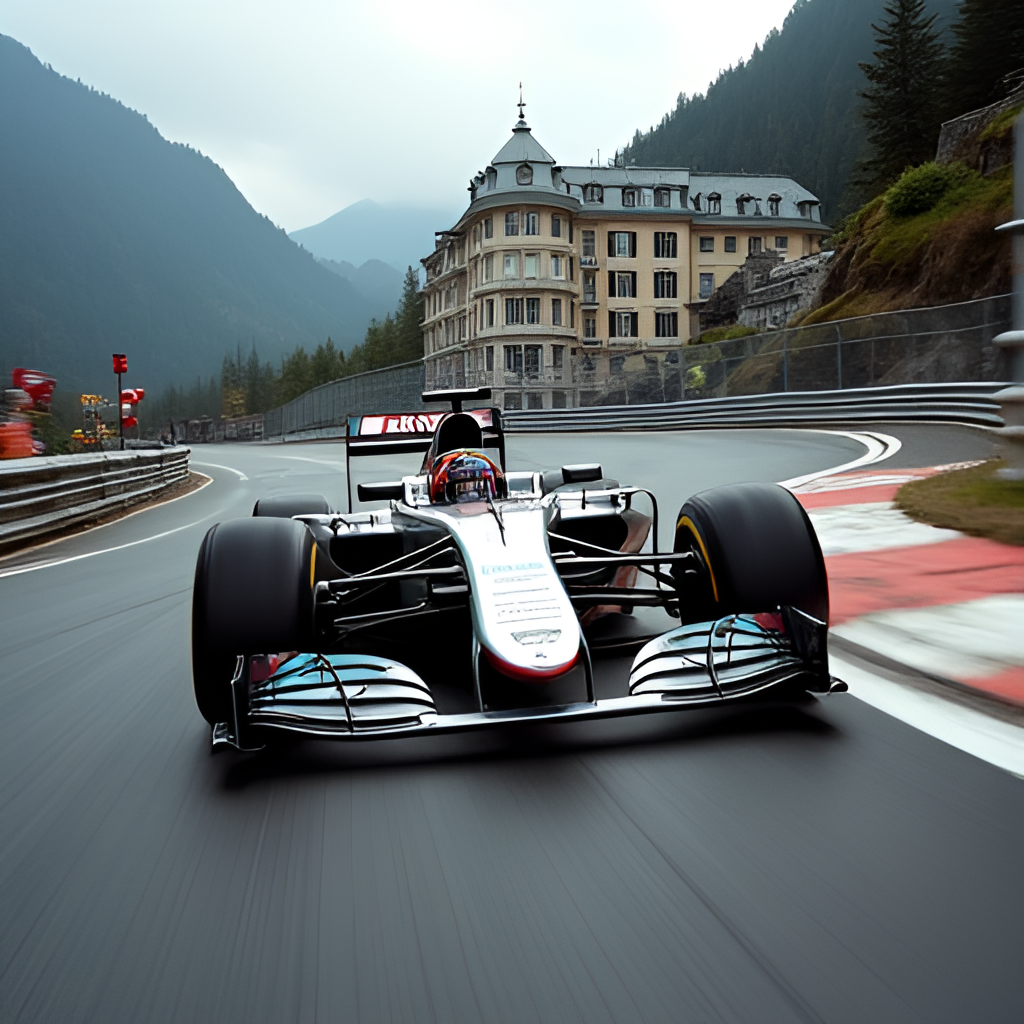
Historically, the Monaco Grand Prix has often been a one-stop race due to low tyre wear and the difficulty of overtaking. This could sometimes lead to a predictable procession, particularly if the pole-sitter maintained their advantage off the line. However, looking ahead, there’s a significant change aimed at shaking things up: a mandatory two-stop strategy for the 2025 race.
This new rule requires drivers to use at least three different sets of tyres, necessitating a minimum of two pit stops. The aim is to inject more excitement and variability into the race by broadening strategic options and increasing the importance of pit stop timing. As technical experts have noted, this will require teams to heavily rely on simulator data to prepare for various scenarios, especially considering the impact of traffic on such a short circuit.
The prospect of two mandatory stops adds a fascinating layer of complexity. Will we see more bold strategies? How will teams manage traffic during their pit windows? It’s a step intended to counter the criticism that the modern Monaco GP race itself can be less thrilling than qualifying.
This image is a fictional image generated by GlobalTrendHub.
The Spectacle and the Glamour
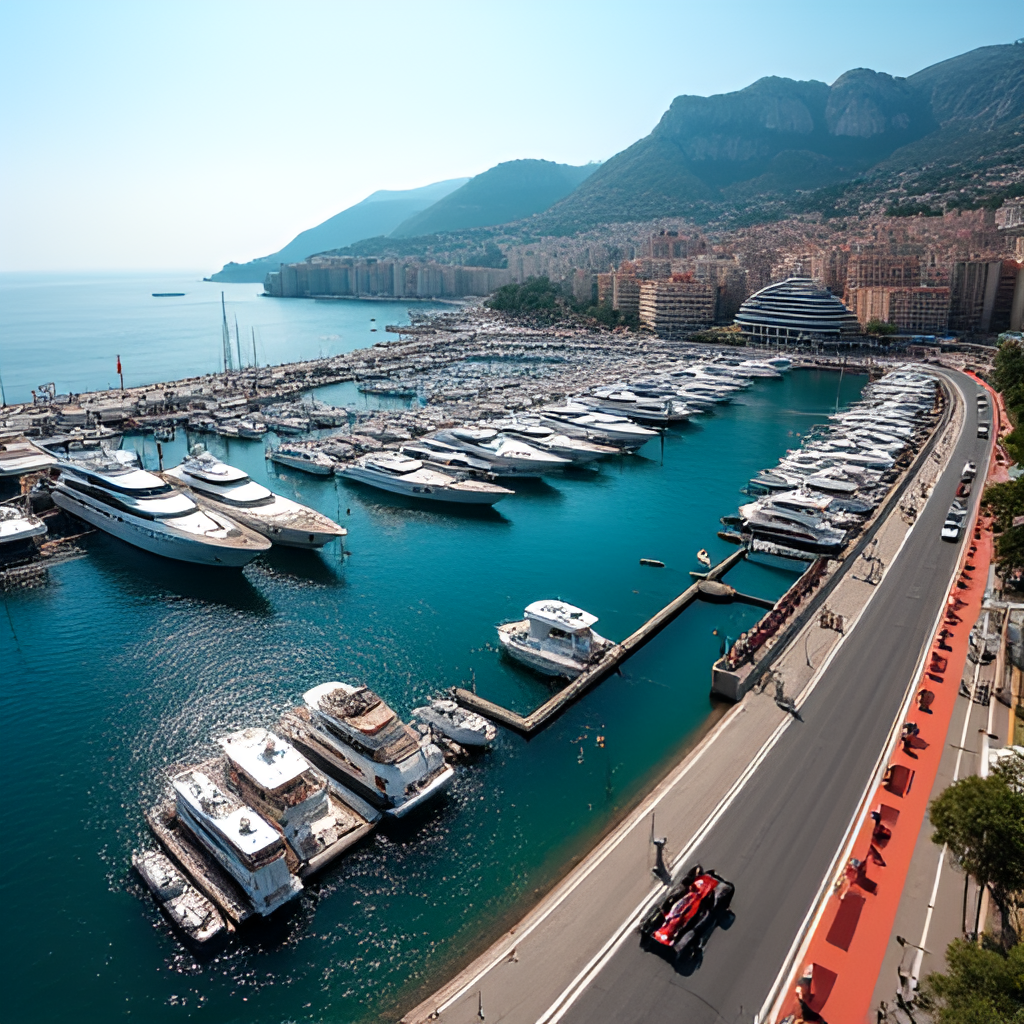
Beyond the racing itself, the Monaco Grand Prix is synonymous with glamour, luxury, and a star-studded atmosphere. The harbor is filled with superyachts, balconies and rooftops offer prime (and expensive) viewing spots, and the principality buzzes with exclusive parties and events. It’s a truly unique blend of elite sport and high society.
Attending the Monaco Grand Prix is often described as a bucket-list experience for motorsport fans, offering a chance to witness the action up close in an incredibly picturesque setting. The sounds of the cars echoing off the buildings, the smell of race fuel, and the palpable energy of the crowd create an unforgettable sensory experience. My hypothetical trip to Monte Carlo, though not during the race, gave me a small taste of the elegance and sheer scale of the place. I can only imagine what it’s like when F1 takes over!
Monaco GP Frequently Asked Questions
- When was the first Monaco Grand Prix held?
- The first race took place on April 14, 1929.
- How long is the Circuit de Monaco?
- The circuit is 3.337 km (2.074 miles) long.
- Why is overtaking so difficult at the Monaco GP?
- The circuit is incredibly narrow with tight corners, leaving very little room for drivers to safely pass.
- What is the shortest corner at the Monaco GP?
- The Fairmont Hairpin (formerly Loews Hairpin) is the slowest corner in Formula 1.
- How many laps is the race?
- The race consists of 78 laps.
- What is the new rule for the 2025 Monaco GP?
- For 2025, a mandatory two-stop strategy has been introduced, requiring drivers to use at least three different sets of tyres.
- Who has won the Monaco Grand Prix the most times?
- Ayrton Senna holds the record with six victories.
Why the Monaco GP Still Captivates
In conclusion, the monaco gp remains an iconic and essential part of the Formula 1 calendar, a true test of driver skill and precision on an unforgiving street circuit. While debates about the excitement of the race itself persist, particularly regarding the difficulty of overtaking, the history, prestige, and sheer spectacle of the Monaco Grand Prix are undeniable. The introduction of the mandatory two-stop strategy for 2025 is an exciting development that aims to inject more strategic intrigue into the race. Whether you’re a seasoned F1 fan or a newcomer, the allure of Monaco endures, promising drama, glamour, and a unique challenge found nowhere else in motorsport.
As someone who dreams of experiencing the race weekend ambiance firsthand, I can say the anticipation for the next Monaco Grand Prix is always high. It’s more than just a race; it’s a cultural event, a historical landmark, and a dazzling display of human and machine pushing the boundaries on the world’s most famous street circuit. The Monaco GP continues to captivate audiences worldwide, and I have no doubt it will continue to do so for generations to come.