
The Daily Telegraph Newspaper: A Legacy in Print and Digital
- The Daily Telegraph Newspaper: More Than Just Headlines
- A Storied History: From Penny Paper to Broadsheet
- Political Stance and Reputation: The “Torygraph”?
- Notable Scoops and Investigative Journalism
- The Digital Transformation: The Telegraph Online
- Ownership and Recent Developments
- The Daily Telegraph Newspaper: Facing the Future
The Daily Telegraph newspaper is a name synonymous with British journalism, a publication with a rich history and a significant presence in today’s media landscape. When I think about iconic newspapers, The Daily Telegraph, often simply called The Telegraph, definitely comes to mind. It’s a paper that has evolved dramatically since its founding in 1855, moving from a physical broadsheet to a major digital news provider. Let’s explore what makes The Daily Telegraph newspaper a compelling subject, from its origins to its current challenges and triumphs.
A Storied History: From Penny Paper to Broadsheet
The Daily Telegraph and Courier was first published in June 1855, founded by Colonel Arthur B. Sleigh. Interestingly, its initial purpose was to air a personal grievance. Shortly after, Joseph Moses Levy acquired the paper, aiming to offer a cheaper alternative to its competitors. He relaunched it as The Daily Telegraph, priced at just one penny, a move that quickly gained a large readership and saw it outsell The Times within a year. The “and Courier” part of the name was dropped relatively quickly.
Throughout its history, The Daily Telegraph has been known for its commitment to comprehensive reporting, including covering major conflicts since the American Civil War. They even co-sponsored Henry Morton Stanley’s expedition to the Congo in the 1870s. The paper merged with The Morning Post in 1937, further solidifying its conservative stance and readership.
For decades, the newspaper maintained a broadsheet format, a tradition that continued even as it expanded its reach. It’s considered a newspaper of record in the UK. My own experience with newspapers, though not as a journalist, has always involved seeing The Telegraph as a serious publication, often seen on kitchen tables or in busy train carriages across the country.

This image is a fictional image generated by GlobalTrendHub.
Political Stance and Reputation: The “Torygraph”?
It’s no secret that The Daily Telegraph newspaper is politically conservative and has consistently supported the Conservative Party in UK general elections since 1945. This unwavering support has earned it the well-known nickname “Torygraph.”
While its editorial stance is clearly right-leaning, the paper has historically been recognized for a high standard of reporting and insightful feature articles. Some sources note that while the main reporting shows a restrained support for the Conservative Party, some columnists express more fervent views on topics like the European Union and climate change. This mix of straight reporting and strong opinion is characteristic of many newspapers, but it’s particularly pronounced in The Telegraph’s identity.
In my opinion, understanding a newspaper’s political leaning is crucial for any reader. It helps provide context for the stories and analysis presented. The Daily Telegraph’s clear conservative viewpoint is a defining characteristic.
Notable Scoops and Investigative Journalism
Despite its political alignment, The Daily Telegraph newspaper has a strong track record of significant news scoops and investigative journalism. One of the most famous was rookie reporter Clare Hollingworth’s scoop on the outbreak of World War II in 1939, often called “the scoop of the century.”
More recently, the paper was central to revealing the 2009 parliamentary expenses scandal, which led to several high-profile resignations and earned The Telegraph the title of 2009 British Newspaper of the Year. They’ve also conducted undercover investigations, such as the one involving the England football manager Sam Allardyce in 2016, and published the “Lockdown Files” in 2023.
These instances highlight the newspaper’s commitment to holding power accountable, regardless of political persuasion. It demonstrates that The Daily Telegraph newspaper values investigative reporting as a core part of its mission.
The Digital Transformation: The Telegraph Online
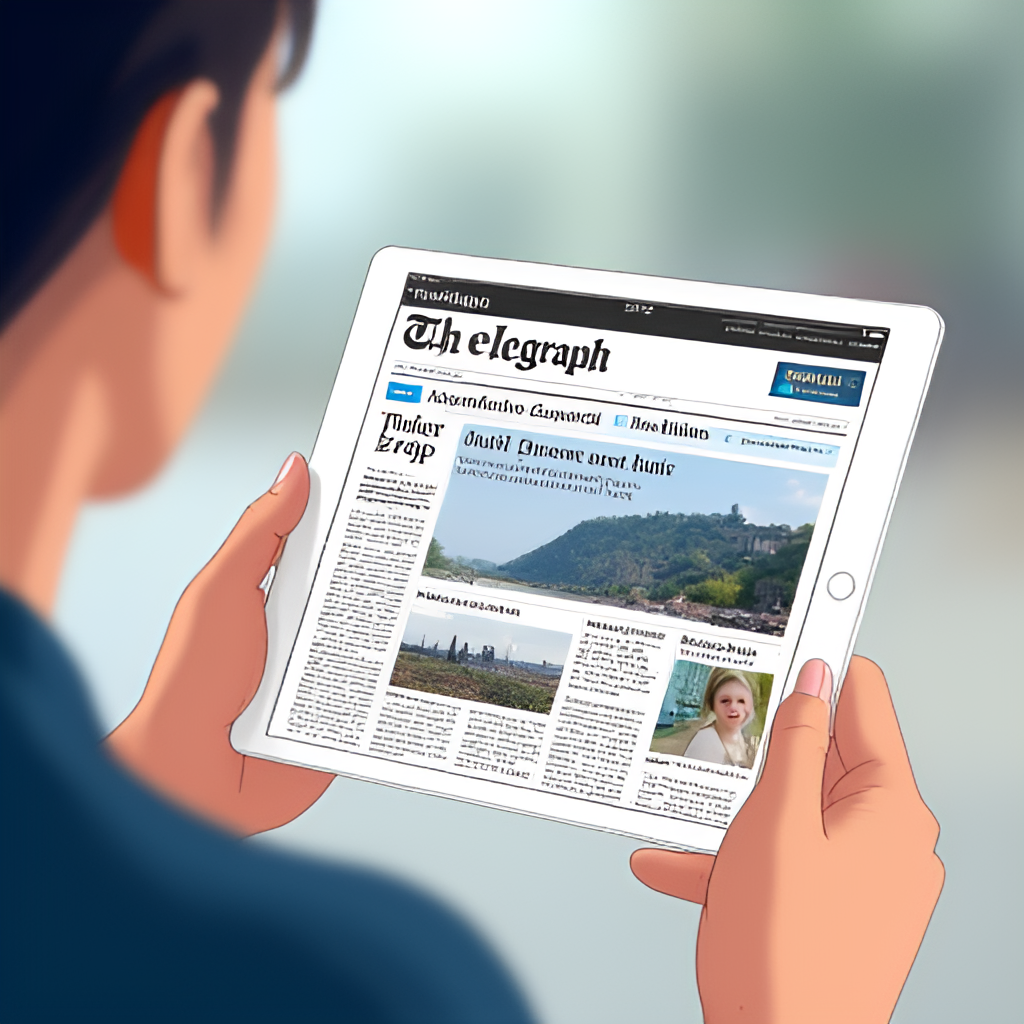
Like most newspapers, The Daily Telegraph has undergone a significant digital transformation. Its online presence, Telegraph.co.uk, launched in 1994 and was Europe’s first daily web-based newspaper. This was a pioneering step at a time when the internet was still in its early stages.
Telegraph.co.uk includes content from both The Daily Telegraph and The Sunday Telegraph, alongside web-only articles, breaking news, features, and multimedia content. The website has received accolades, including UK Consumer Website of the Year in 2007.
In recent years, The Telegraph has focused heavily on a subscriber-first strategy, aiming to increase digital subscriptions. This has proven successful, with Telegraph Media Group announcing over one million subscriptions by late 2023, a significant portion of which are digital. This shift to digital subscriptions reflects a broader trend in the newspaper industry as print circulation has declined. Access to premium articles on Telegraph.co.uk and The Telegraph app is a key part of their subscription offering.
This image is a fictional image generated by GlobalTrendHub.
Ownership and Recent Developments
The ownership of The Daily Telegraph newspaper has changed hands several times throughout its history. In 1985, Canadian financier Conrad Black acquired a majority interest, and ownership shifted to his holding company, Hollinger Inc. In 2004, twin brothers Sir David and Sir Frederick Barclay purchased the Telegraph Media Group. This ownership continued until recently.
In a significant development in 2023, Lloyds Banking Group took control of the companies owning The Telegraph titles and The Spectator due to outstanding debt. This led to the publications being put up for sale. A recent attempted acquisition by a group largely owned by state-backed investors in the UAE was blocked by the UK government due to new laws preventing foreign governments from owning British newspapers. As of late 2024, the sale process is ongoing.
These recent events highlight the financial pressures and complexities facing even established newspapers in the current media climate. The future ownership of The Daily Telegraph newspaper remains a topic of considerable interest.
The Daily Telegraph Newspaper: Facing the Future
The Daily Telegraph newspaper has a long and fascinating history, from its beginnings as a penny paper challenging the establishment to its current position as a major multimedia news organization. It has consistently provided in-depth reporting and maintained a distinct conservative voice. While it faces challenges in the digital age, like all newspapers, its focus on subscriptions and its continued commitment to investigative journalism suggest a determination to adapt and thrive. The Daily Telegraph newspaper remains a significant institution in British media, and it will be interesting to see how its story unfolds in the coming years.