
32 airports closed: Navigating the Disruption and Understanding the Impact
- Introduction: The Reality of Widespread Airport Closures
- Why Do Airports Close? Understanding the Reasons
- The Immediate Impact on Travellers
- Airline and Industry Response to Mass Closures
- Historical Context: When Multiple Airports Have Closed Before
- Strategies for Navigating Travel Disruption
- Potential Long-Term Effects on Aviation
- Conclusion: The Enduring Impact of 32 Airports Closed
The reality of 32 airports closed across a region can send ripples of disruption through the lives of countless travellers and the aviation industry alike. When I first heard about a situation where so many airports were shut down simultaneously, my initial thought was the sheer chaos it must cause for those with immediate travel plans. It’s a stark reminder of how interconnected our world is and how vulnerable air travel can be to unforeseen circumstances. This article delves into the implications of such widespread closures, exploring the reasons behind them, the immediate and long-term effects, and how individuals and the industry cope.
Why Do Airports Close? Understanding the Reasons
Airport closures, especially on a large scale, aren’t a common occurrence, thankfully. However, several factors can lead to such a drastic measure. Geopolitical tensions, like those that recently led to the closure of 32 airports across northern and western India due to escalating military tensions with Pakistan, are a significant cause. Operation Sindoor, as it was termed, involved suspending civil flight operations as a precautionary measure.
Beyond political or military reasons, other events can ground flights and shut down facilities. Extreme weather is a frequent culprit. Think of blizzards, hurricanes, or even dense fog that reduces visibility to dangerous levels. We’ve all seen news reports of airports brought to a standstill by a major snowstorm, leaving passengers stranded and tarmacs resembling parking lots.
Technical failures can also necessitate closures. A power outage, as experienced at Heathrow Airport in March 2025 due to a fire at an electrical substation, can cripple operations. Such incidents, though often resolved relatively quickly, highlight the reliance of modern airports on complex infrastructure. While the immediate cause might be a fire, the ripple effect on travel can be significant.
Strikes by airport staff or air traffic control can also lead to significant disruption and even temporary closures. While not always resulting in a full shutdown of dozens of airports, coordinated industrial action can severely limit capacity and force cancellations.
Finally, we can’t forget public health crises. The COVID-19 pandemic, for instance, led to widespread border closures and drastically reduced air travel, forcing many airports to scale back operations or even temporarily close terminals or runways due to the lack of flights. The impact of that global event on the airline industry was immense, with significant job losses and a long road to recovery.

This image is a fictional image generated by GlobalTrendHub.
The Immediate Impact on Travellers
When 32 airports are closed, the most immediate and visible impact is, of course, on travellers. Imagine arriving at the airport, ready for your trip, only to find out your flight is cancelled and the entire airport is shut down. It’s a frustrating and stressful experience, to say the least.
Flight cancellations and delays become widespread. Airlines are forced to ground planes, leaving passengers stranded. This can lead to chaotic scenes at terminals, with long queues at customer service desks as people try to rebook or find alternative ways to reach their destinations.
My personal experience with a smaller-scale airport disruption involved a cascading series of delays due to a technical issue. Even just one airport facing significant delays caused knock-on effects for flights across the region. With 32 airports involved, the logistical nightmare is exponentially larger. Passengers miss connections, planned trips are ruined, and essential travel is disrupted.
Airlines typically offer rebooking options or refunds in such situations. However, finding available seats on alternative flights can be challenging, especially when so many routes are affected. Some travellers may need to consider alternative modes of transport, like trains or buses, if those are viable options for their journey.
For those already in the air when closures are announced, flights may be diverted to other operational airports. This can lead to unexpected landings in unfamiliar cities and further delays in reaching the intended final destination. It underscores the dynamic and sometimes unpredictable nature of air travel.
Airline and Industry Response to Mass Closures
The airline industry faces immense challenges when a large number of airports are closed. Airlines have to manage a massive number of flight cancellations and rebookings. This involves extensive communication with passengers, often through their websites, apps, and social media.
From an operational standpoint, airlines must reroute aircraft, manage crew schedules that have been thrown into disarray, and find alternative airports for flights already en route. This is a complex logistical puzzle that requires rapid decision-making and coordination. The financial implications are significant, too, with lost revenue from cancelled flights and the costs associated with accommodating stranded passengers.
Airport authorities work in tandem with airlines and air traffic control to manage the situation. Their focus is on safety and security, as well as on reopening facilities as soon as it is safe and feasible. This might involve inspections, repairs, or simply waiting for the disruptive event to pass, whether it’s a security threat or severe weather.
During the recent closures in India, authorities issued NOTAMs (Notices to Airmen) to inform pilots and airlines about the suspension of civil flight operations. This is a standard procedure to ensure the safety of airspace during disruptive events.
The industry also focuses on enhancing security protocols during times of heightened tension. This can include increased checks at airports and restrictions on visitor entry to terminals, as seen during Operation Sindoor.
Historical Context: When Multiple Airports Have Closed Before
While 32 airports closed simultaneously is a significant event, it’s not the first time multiple airports have been affected by widespread disruptions. History offers several examples, though the scale and reasons may vary.
The most prominent recent example is the impact of the COVID-19 pandemic, which led to unprecedented restrictions on travel and significant operational changes, including temporary closures of parts of airports or entire facilities in some cases.
Geopolitical events have also historically led to airspace and airport closures. During periods of conflict, airspace over affected regions is often restricted or closed for civilian traffic, impacting nearby airports. We’ve seen this in various conflicts around the world, where the risk to civilian aircraft becomes too high.
Natural disasters, such as volcanic ash clouds, can also cause widespread disruption to air travel across entire continents, forcing numerous airports to close. The Eyjafjallajökull volcanic eruption in Iceland in 2010, for example, led to extensive airspace closures across Europe, impacting thousands of flights.
Looking back further, events like the closure of Hong Kong’s Kai Tak Airport in 1998, while planned and not a sudden disruption of 32 airports, shows how large, operational airports can cease to function for various reasons, in that case, to make way for a larger, more modern facility. Similarly, some smaller airports in the US have been abandoned over time due to changing aviation needs.
Strategies for Navigating Travel Disruption
Facing travel disruption due to airport closures can be incredibly frustrating, but there are steps you can take to navigate the situation as smoothly as possible. Firstly, stay informed. Monitor updates from your airline and the affected airports through their official websites, apps, and social media. News outlets will also provide crucial information on the situation.
Contact your airline as soon as possible. They are your primary resource for rebooking options or refunds. Be prepared for potentially long wait times on customer service lines due to the high volume of calls. Checking their website or app for self-service options might be quicker.
Understand your rights as a passenger. Depending on your location and the airline, you may be entitled to compensation or care and assistance, such as food, drink, and accommodation, if your flight is cancelled or significantly delayed.
If you have travel insurance, review your policy to see what coverage you have for trip cancellations or interruptions. This could help cover additional expenses incurred due to the disruption, such as alternative transportation or accommodation.
Consider alternative travel arrangements if feasible. Depending on your destination, trains, buses, or even driving might be an option, though these can also be affected by the same events that closed the airports.
Patience is key. During large-scale disruptions, airport and airline staff are often dealing with a high volume of stressed passengers. Remaining calm and polite can go a long way when seeking assistance. I recall a time when a simple act of kindness from an airline agent during a delay made a world of difference to my experience.
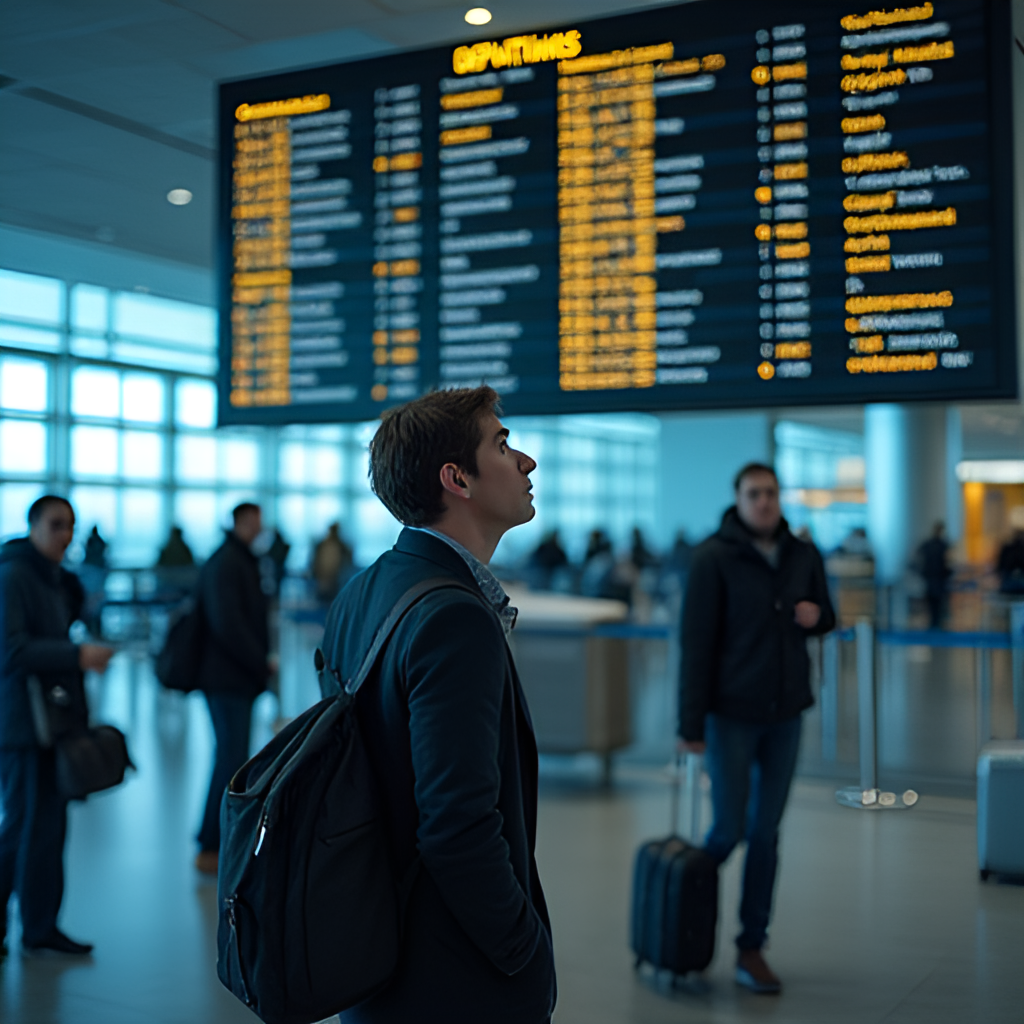
This image is a fictional image generated by GlobalTrendHub.
Potential Long-Term Effects on Aviation
The closure of 32 airports, even if temporary, can have longer-term implications for the aviation industry. For the airlines directly affected, there are financial losses from cancelled flights and the cost of managing the disruption. Repeated or prolonged closures in a region could impact future route planning and investment decisions.
Such events also highlight the need for robust crisis management strategies within the aviation sector. Airlines and airports constantly review and update their procedures for dealing with unexpected disruptions, whether they are security-related, weather-induced, or technical.
There might also be a renewed focus on diversifying travel options and investing in alternative transportation infrastructure in affected regions to provide more resilience during air travel disruptions. While air travel is often the quickest option for long distances, a reliable rail network or improved road infrastructure can provide valuable alternatives when airports are inaccessible.
From a security perspective, large-scale closures due to tensions like Operation Sindoor can lead to permanent enhancements in security protocols and air traffic management procedures in the affected airspace.
Finally, these events can influence passenger confidence in air travel. While the industry is incredibly safe overall, major disruptions can understandably cause some travellers to reconsider their plans or seek destinations less prone to such issues in the future.
Conclusion: The Enduring Impact of 32 Airports Closed
The scenario of 32 airports closed is a powerful illustration of how various factors, from geopolitical events to technical failures, can impact the interconnected world of air travel. It disrupts lives, challenges the aviation industry, and underscores the importance of preparedness and resilient infrastructure. My experience, even with smaller delays, taught me the value of staying informed and understanding my rights as a traveller. While the immediate chaos is evident, the long-term effects can shape how the industry operates and how we approach travel in the future. Ultimately, when 32 airports are closed, it serves as a reminder of both the complexities of modern aviation and the need for adaptability in the face of unexpected challenges.